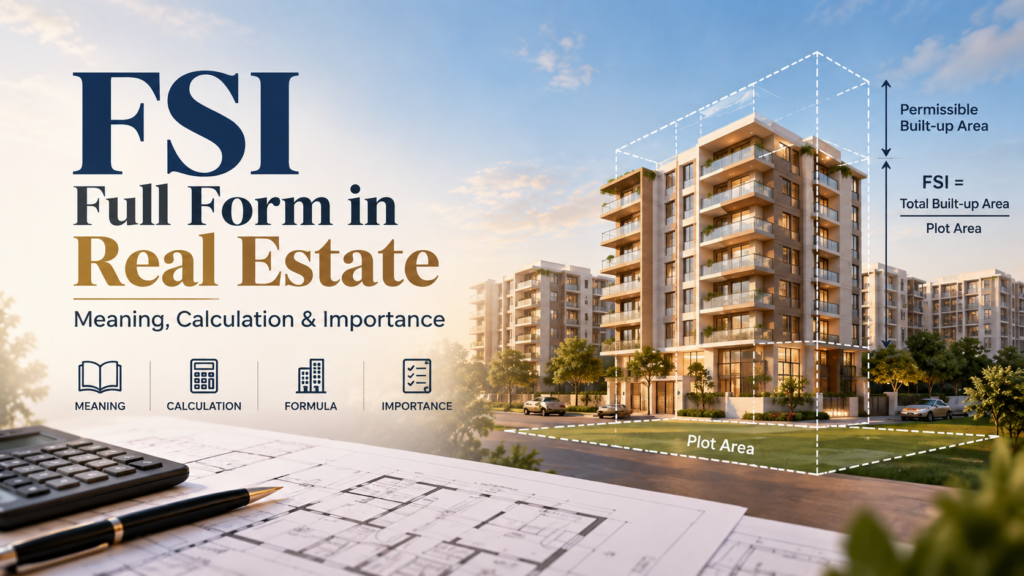

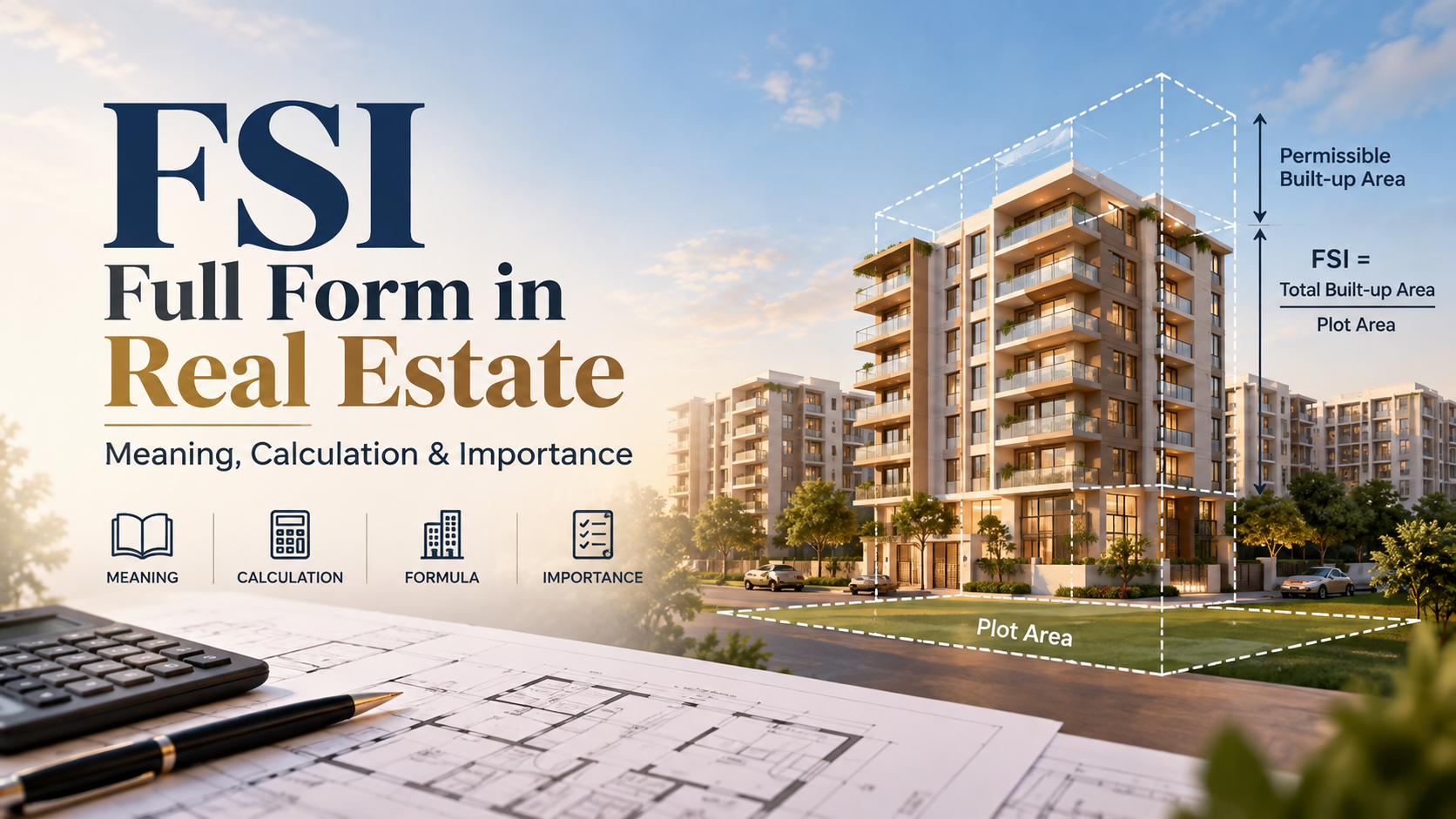
Real estate is filled with terms that buyers have difficulty understanding. FSI is just another one of those terms. The FSI full form in real estate is Floor Space Index. Basically it sets the limit on the maximum size of a building that you can construct on a plot.
So for all of you thinking about what is FSI, it is simply the ratio of the total floor area of a building to the size of the plot. Understanding the FSI can help buyers and developers know the development potential of the property they are thinking of buying.
In this blog we will go into the FSI full form in real estate, how you can calculate it, factors affecting the FSI and why it really matters. We will also be covering the differences between FSI and FAR so that you don’t get confused between the two.
What Is the Full Form of FSI in Real Estate?
FSI also known as the Floor Space Index is an important term in real estate. It helps to calculate the total area that you can build on a plot or land. It is calculated by just dividing the total area of a building by the plot area.
For example, if you have a 1,000 sq. ft. plot and the permitted FSI is 2, you can have a total floor area of up to 2,000 sq. ft. So this area can be covered on different floors, depending on the building rules and approvals from the local authority.
The permitted FSI of building is not the same everywhere. It can be different depending on factors like the location, road width, type of property, land use, and local development regulations. Therefore, it is important to check the FSI allowed for a property before planning construction or making an investment.
Why Is FSI Important in Real Estate?
FSI is important because it helps you decide how much construction can be done on a plot. It also helps buyers understand the development of a property and the space. Here are some key reasons why FSI matters in real estate:
1. Helps Determine Construction Area
FSI in real estate decides the total floor area that can be constructed on a plot. For example, a higher FSI allows more floor space to be built, while a lower FSI puts a limit on the total construction area. This gives buyers and developers a clear idea of the permitted construction.
2. Control Building Density
FSI helps authorities control how many buildings and how much construction can be done in an area. A higher FSI for residential buildings can allow more construction on the same land, which may increase the number of people living or working there. This helps in planning the overall density of an area.
3. Useful for Property Buyers
Understanding Floor Space Index can help buyers know what area they are actually getting in a property. It gives an idea about the permitted construction and helps them compare their options. Buyers must check whether the planned construction matches the rules and approvals.
4. Supports Better Urban Planning
FSI is also useful for planning roads, parking, water supply, electricity, and other basic facilities. When construction is planned according to the permitted FSI, authorities can better manage the needs of an area and reduce the chances of unplanned or excessive development.
5. Affects Property Value
Indian FSI also impacts the value and development potential of land. A plot with a higher permitted FSI may allow more construction, which can be useful for developers.
How Is FSI Calculated?
Now that you know the FSI full form in real estate, you can easily calculate the FSI on your own. The FSI will help you find out how much total floor area you can construct on the plot that you buy. Use this FSI formula to calculate:
FSI = Total Floor Area of All Floors ÷ Plot Area
For example, suppose you have a plot of 500 sq. m. and the total floor area of the building is 750 sq. m.
FSI = 750 ÷ 500 = 1.5
So, the FSI formula has an answer of 1.5 in this case. This means the total permitted floor area is 1.5 times the plot area. If the local authority allows an FSI of 2, the property may have scope for more construction, subject to other applicable building rules and approvals.
The actual FSI allowed can be different depending on the location and local development regulations.
Also see: Can NRI Buy Property in India? Rules & Requirements
What Factors Affect FSI?
FSI full form in real estate is Floor Space Index and it is not fixed for all properties or locations. Several factors help authorities decide how much construction can be permitted on a given plot. Here’s a list:
1. Zoning Rules
Zoning laws tell you what you can do with a particular piece of land. These rules can have different floor space index FSI limits for residential, commercial, industrial or other areas. The purpose of the development also matters when determining how much construction can be done on the plot.
2. Location
The location of a property also directly affects its FSI area. The FSI rules for a property in a well developed area or a place with better connectivity could be different than a property in a less developed area. These limits are imposed by local authorities based on development plans and needs of the area.
3. Road Width
Also, the width of the road near a property can influence the FSI in real estate. A wider road can usually accommodate more traffic, and give better access to the buildings. In some areas, wider roads may enable more building, while narrower roads can impose more restrictive construction limits on properties.
4. Plot Size
FSI also takes into account the size of the plot. The possibilities for development are different in a larger plot than in a smaller plot. However, a bigger plot does not automatically mean higher FSI area.
5. Infrastructure
Authorities also look at the infrastructure in place before allowing more building. Additional development needs to be supported by water supply, electricity, sewage systems, roads and other basic facilities. If the current infrastructure is capacity constrained there may be limits on the amount of construction permitted.
6. Building Type
The type of building being developed can also affect Floor Space Index. Residential, commercial, industrial, and institutional buildings often have different requirements. For instance, a commercial project may have a different permissible FSI than a housing development in the same area according to the applicable development regulations.
7. Environmental Rules
Environmental needs can also impact the Floor Space Index in some regions. Ecologically sensitive zones, heritage zones, and zones where additional open space is needed can have higher building restrictions. This would allow for protection of valuable regions as well as the preservation of the surrounding area.
FSI vs FAR: What Is the Difference?
FSI full form in real estate is Floor Space Index and FAR full form is Floor Area Ratio. Mostly they are quite similar but the term used depends on the location and the local rules. Below is a table highlighting the differences:
| Point | FSI | FAR |
| Full Form | Floor Space Index | Floor Area Ratio |
| Meaning | Shows how much total floor area can be built compared to the plot area. | Shows the ratio between total floor area and the plot area. |
| Usage | More commonly used in some regions, especially in India. | More commonly used in some other regions and planning regulations. |
| Main Purpose | Helps define the permitted construction on a plot. | Helps define the permitted construction on a plot. |
In simple words, floor space index in India (FSI) and FAR generally mean the same and are also calculated the same way. The main difference is often the term used by the local authority or region.
Wrapping Up
FSI full form in real estate and FSI meaning in real estate are just some things that every buyer and developer in real estate should know of. It tells you how much total floor area can be built on a particular plot, based on the rules of that location.
FSI in real estate is different for different areas and property types, so it is important to check the local regulations before making any decision. It also gives an idea about the construction limits and what can be developed on the land. A little knowledge of FSI can help you make a more informed property decision.
Also see: RERA Full Form in Real Estate: Meaning & Importance
FAQs
What does 2.5 FSI mean?
A 2.5 FSI meaning is that you can build a total floor area up to 2.5 times the size of your plot, as allowed by local rules.
How much FSI is good?
FSI full form in real estate is Floor Space Index and a FSI of 1.5 to 2.5 for residential properties is considered good.
How to calculate FSI of land?
The FSI calculation of land can be done by dividing the total built-up area of all floors by the total plot area.
How can I check FSI in my area?
You can check the FSI (Floor Space Index) for your property on the official website of your local municipal corporation.